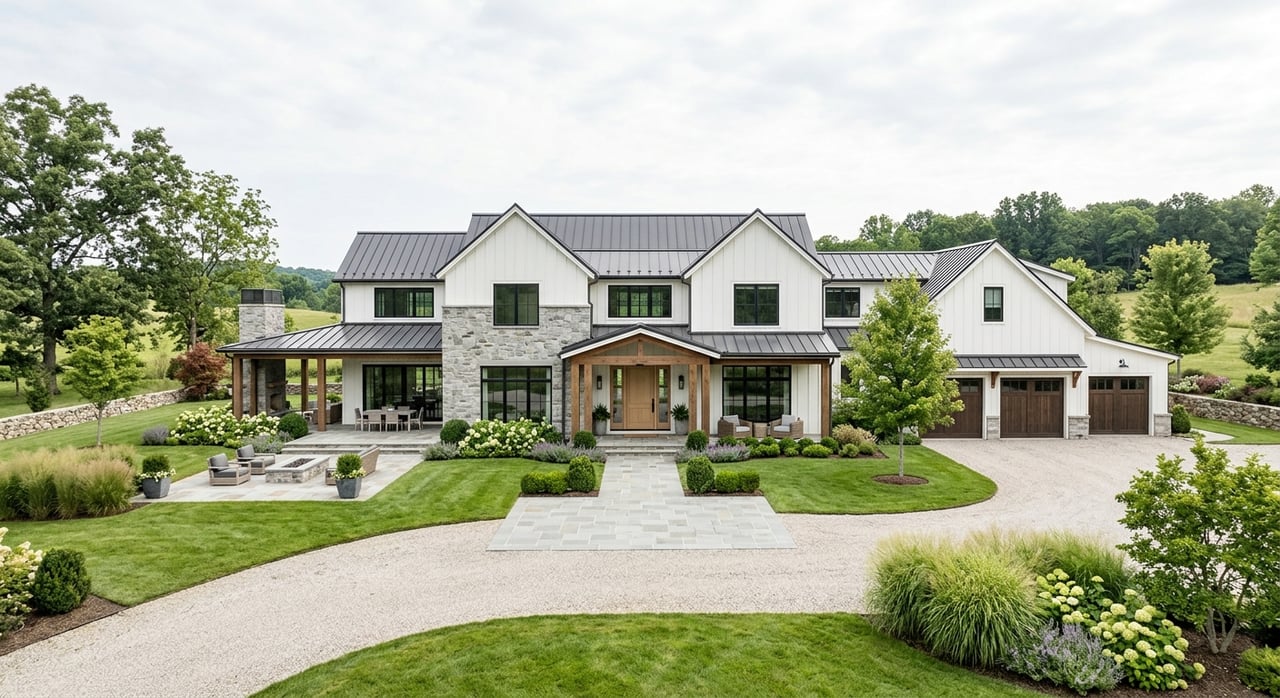
Wondering how Solebury really works when you move beyond the postcard view? That is a smart question, because Solebury is not one single downtown or one easy-to-summarize neighborhood. If you are considering a home here, it helps to understand how its villages, scenic roads, and preserved landscapes shape daily life. This guide will help you get oriented to what Solebury feels like on the ground and what to look for as you narrow your search. Let’s dive in.
How Solebury Is Laid Out
Solebury Township covers 26.7 square miles in central Bucks County. It borders the Delaware River, surrounds New Hope Borough, and is crossed by U.S. Route 202, which serves as the township’s main transportation spine.
That layout matters because Solebury has two very different patterns at once. Along the Route 202 corridor, you will find the township’s higher-intensity nonresidential uses and higher-density residential uses. Beyond that corridor, much of Solebury still reads as rural, with villages, farms, preserved land, and winding roads.
A big part of Solebury’s identity is land preservation. Township materials report that 6,691 acres, or 38.5% of township land, have some level of protection from further development. That preservation includes farmland, stream corridors, steep slopes, scenic vistas, and historic sites.
Why Solebury Feels Different
If you are expecting a single town center, Solebury may surprise you. The township is better understood as a collection of villages, hamlets, and landscape pockets rather than one compact place.
Township planning materials describe villages or hamlets including Aquetong, Carversville, Centre Bridge, Cottageville, Lumberville, Phillips Mill, and Solebury, with Cuttalossa noted as another hamlet or cluster. Each has its own historic and architectural character, and preservation is a major theme throughout the township.
This pattern gives Solebury a layered feel. One road may bring you through a crossroads village with historic buildings close to the street, while the next turns into open fields, wooded edges, creek valleys, or long rural stretches.
Village Pockets to Know
Carversville
Carversville is one of the clearest examples of Solebury’s historic village character. The township traces its roots to a Lenni Lenape village and later mill development along Paunacussing Creek.
Today, the setting is shaped by the creek and by a concentration of 18th-century, Federal, and Victorian homes. Stover’s Mill and the Carversville Inn remain important landmarks, and the streetscape is closely tied to historic architecture and the waterway.
Centre Bridge
Centre Bridge reflects Solebury’s long connection to the Delaware River. Originally called Reading’s Ferry, it developed around an early river crossing and later around the bridge and canal.
For a buyer, that means the village has a strong transportation-and-river history rather than a typical inland village feel. The township also notes that it is a popular stopping place for hikers and bicyclists using the Delaware Canal towpath.
Cuttalossa
Cuttalossa is especially shaped by landscape. It developed around water power on Cuttalossa Creek, and the first mill built there in 1748 still stands.
The district is known for its preserved mill-and-valley scenery. If you are drawn to places where the surrounding land feels just as important as the buildings, Cuttalossa is one of Solebury’s strongest examples.
Lumberville
Lumberville is described by the township as a typical 19th-century one-industry mill village. It historically shipped lumber, coal, and limestone by river and canal, and its old inn dates to the 1700s.
The township says the village’s appearance is unchanged and its character remains largely intact. It also became a haven for artists and writers in the early 1900s, which adds another layer to its sense of place.
Phillips Mill
Phillips Mill stands out as a preserved milling village with a strong community identity. Township materials describe it as one of the best-preserved examples of a mid-18th-century milling village in America.
Over time, the mill buildings also served summer tenants and impressionist landscape painters. Today, the area reads more like a community-centered historic setting than a conventional commercial strip.
Upper Aquetong Valley
Upper Aquetong Valley is different from the village pockets because it is primarily a farm landscape. The township identifies it as the site of the region’s earliest English Quaker settlement, with dispersed family farmsteads dating from the 1750s.
Those farmsteads were laid out on large rectangular lots, generally between 100 and 200 acres. If you are looking for a preserved agricultural pattern rather than a village core, this is one of Solebury’s most distinctive areas.
Crossroads Villages vs. Back Roads
One of the most helpful ways to understand Solebury is to separate its village pockets from its back-road settings. The township’s design guidance describes Aquetong and Solebury as crossroads villages, while places like Upper Aquetong Valley or stretches near scenic roads feel more dispersed and landscape-driven.
For you as a buyer, that difference affects how a property lives day to day. A village setting may offer a tighter historic streetscape and a stronger sense of being in a defined place. A back-road setting may offer more privacy, broader views, and more separation between properties.
Neither is automatically better. The right fit depends on whether you want a home that feels tucked into a historic pocket or one that opens into preserved scenery and a more rural rhythm.
What the Roads Tell You
Solebury’s roads are part of the experience. According to the township’s comprehensive plan, roads here are often narrow, winding, and curbless, with trees, embankments, hedgerows, and historic buildings shaping the view.
The township identifies scenic or moderately scenic roads such as Aquetong Road, Lower Mountain Road, Covered Bridge Road, Phillips Mill Road, Pidcock Creek Road, Ely Road, Sawmill Road, and Greenhill Road. Scenic-road setbacks are also used to help protect the landscape.
That means a Solebury address can feel very different from a typical subdivision setting. As you drive through the township, you may notice frequent transitions between fields, woodland, creek corridors, and historic structures, often within a short stretch of road.
Historic Character Matters Here
Architecture is a big part of Solebury’s identity. Township planning materials note one of the highest concentrations of 18th-century stone structures in Bucks County, and local design guidance points to repeated use of stone, stucco, painted wood, and traditional roofing materials.
For buyers, this often translates into a cohesive visual character. Even when homes differ in size or age, many parts of Solebury share a consistent rural and historic look that comes from materials, scale, and preservation patterns.
In some areas, that character is not just appreciated. It is formally reviewed. The township’s Historical Architectural Review Board reviews construction and renovation work in the two regulated historic districts, Carversville and Phillips Mill, to preserve design compatibility and historic character.
If you are considering a property in one of those districts, that is an important practical point. Proposed renovations and new construction are reviewed for their effect on historical and architectural integrity, and buffers and setbacks help keep historic areas in their natural settings.
Utilities and Infrastructure to Expect
Solebury’s infrastructure follows its rural settlement pattern. The township says only a small portion of the township, mainly along Route 202, is connected to public sewer.
Most of the township relies on individual septic systems for wastewater. The township also notes that public water and sewer service are concentrated along the Route 202 corridor near New Hope Borough, while most of Solebury lies outside that service pattern.
This does not make one area better than another, but it does change what you should ask when comparing properties. Homes in village pockets or along Route 202 may have a different utility setup than homes deeper in the township’s rural and preserved areas.
Recreation Adds to Daily Life
Solebury’s recreation network reinforces its landscape-first feel. Aquetong Spring Park, located at U.S. Route 202 and Lower Mountain Road, includes trails, benches, overlook areas, and a waterfall that feeds toward the Delaware River.
The Solebury Trail connects from Sugan Road toward New Hope and the Canal Park Trail. The township also notes that the Delaware Canal towpath links Washington Crossing Historic Park, Lumberville, and New Hope.
For buyers, these features help explain why Solebury often feels connected by scenery as much as by roads. Trails, creek valleys, river access points, and preserved land all contribute to the everyday experience of being here.
How to Narrow Your Search
If you are trying to decide where to focus, start by thinking about the setting you want rather than just the price point or square footage. In Solebury, location is often about feel, road pattern, and preservation context as much as it is about distance on a map.
You may want to ask yourself:
- Do you want a home in a defined village pocket or along a quieter back road?
- Are you drawn to creek-side, river-oriented, or farm-landscape settings?
- Do you prefer historic architecture and older streetscapes?
- Would you be comfortable with a property outside the public water and sewer service pattern?
- Are scenic roads and preserved surroundings part of the lifestyle you want every day?
These questions can quickly clarify which parts of Solebury deserve a closer look. They also help you compare homes in a way that reflects how the township actually functions.
The Bottom Line for Buyers
Solebury rewards buyers who pay attention to micro-location. A home near Route 202 may offer a different daily rhythm than one in Carversville, Lumberville, Phillips Mill, or along one of the township’s scenic back roads.
In general, the village pockets tend to appeal to buyers who value historic character, older architecture, and a strong sense of place. The back roads often appeal to buyers who want privacy, preserved scenery, and a more agricultural or estate-like setting.
That is why local guidance matters here. When you understand how Solebury’s villages, roads, preservation areas, and infrastructure fit together, you can search with much more confidence and find the setting that truly matches your priorities.
If you are exploring Solebury or other Bucks County communities, The Walton-Winn Team can help you compare locations, understand the tradeoffs, and find the right fit for your next move.
FAQs
What is Solebury Township like for homebuyers?
- Solebury is a collection of villages, hamlets, farms, and preserved open spaces rather than one compact town center, with more development concentrated along the Route 202 corridor.
What are the main villages in Solebury Township?
- Township materials identify places such as Aquetong, Carversville, Centre Bridge, Cottageville, Lumberville, Phillips Mill, Solebury, and Cuttalossa, each with its own historic and architectural character.
What is the difference between Solebury villages and back-road homes?
- Village areas often offer historic streetscapes and a defined sense of place, while back-road settings tend to offer more privacy, preserved scenery, and a more rural landscape feel.
Are there historic district rules in Solebury Township?
- Yes. The township’s Historical Architectural Review Board reviews construction and renovation work in the regulated historic districts of Carversville and Phillips Mill.
Do Solebury homes usually have public sewer and water?
- Only a small portion of Solebury, mainly along Route 202 near New Hope Borough, is connected to public sewer and water service, while much of the township relies on individual septic systems.
Which roads are considered scenic in Solebury Township?
- The township identifies roads such as Aquetong Road, Lower Mountain Road, Covered Bridge Road, Phillips Mill Road, Pidcock Creek Road, Ely Road, Sawmill Road, and Greenhill Road as scenic or moderately scenic routes.